Beyond Space-Saving: The Definitive Guide to Adaptive Home Design
You've seen the endless inspiration galleries and the hyper-specific product pages. One side shows you a thousand beautiful but impractical ideas for "multi-purpose rooms," while the other tries to sell you a single, expensive piece of furniture. You're stuck in the middle, armed with inspiration but lacking a clear plan to turn your vision into a functional reality. How do you move from feeling cramped and constrained to creating a space that effortlessly adapts to your life?
The answer isn't just about finding clever space-saving hacks. It's about adopting a strategic approach to adaptive design. This guide bridges the gap between the "why" of flexible living and the "how" of planning for it. We'll give you the framework to evaluate your needs, compare your options, and make confident decisions that transform your home's utility and feel.
Part 1: The Flexible Home Framework - How to Plan Your Space
Before you even think about furniture, you need a plan. Most resources jump straight to solutions, but true adaptability starts with understanding the geometry and flow of your life within your space. This is where competitors often fail—they offer ideas but not a methodology. Our framework provides a clear, strategic path forward.
Step 1: Define Your Zones
A single room can serve multiple functions, but not all at once. Zoning is the practice of mentally or physically dividing a room based on its primary activities. For a home office that doubles as a guest room, you'll have a "work zone" and a "sleep zone." Consider:
- Primary Use: What will the space be used for 80% of the time? This function should be the easiest to access and use.
- Secondary Use: What is the less frequent but equally important function? This can be designed to be deployed when needed.
- Overlap: Are there any shared elements? A desk chair might need to be moved when the bed is unfolded.
Step 2: Map Your Traffic Flow
How do you move through the room during each activity? A layout that works perfectly for a home office might become an obstacle course when a guest bed is pulled down. Grab a piece of paper and draw lines indicating the paths you'll walk. The goal is to ensure that transforming the room doesn't create frustrating bottlenecks.
Step 3: Measure for Transformation
Measure your room, but do it twice. First, measure it in its primary state (e.g., as a living room). Second, measure the space required for its secondary function (e.g., with a dining table fully extended or a wall bed lowered). This reveals the true functional footprint of your furniture and helps you avoid buying a piece that technically fits but renders the room unusable when transformed.
Part 2: Room-by-Room Multi-Purpose Strategies
With a solid plan, you can now explore specific strategies. While inspirational sites like HGTV show beautiful finished rooms, they don't connect the dots back to a practical plan. Here’s how to apply the framework to the most common multi-functional challenges.
The Home Office / Guest Room Combo
This is the classic adaptive space problem. The key is prioritizing the daily-use office function while ensuring the guest experience is comfortable, not an afterthought.
- Zoning: The work zone needs task lighting and an ergonomic setup. The sleep zone requires a comfortable surface and a clear path to the door.
- Solution: A vertical wall bed system is often superior to a sleeper sofa. It allows you to use a real mattress for guest comfort and reclaims maximum floor space for your daily office life. Pair it with a slim-profile desk or a fold-down workspace. With our AI design tool, you can visualize how different layouts impact your available floor spacebefore committing.
The Living Room / Dining Room
In many apartments and smaller homes, a dedicated dining room is a luxury. The goal is to create a space that feels like a relaxing lounge but can transform for meals without a major hassle.
- Zoning: The social zone is centered around seating and entertainment. The dining zone is a temporary overlay that needs to be deployed and stored efficiently.
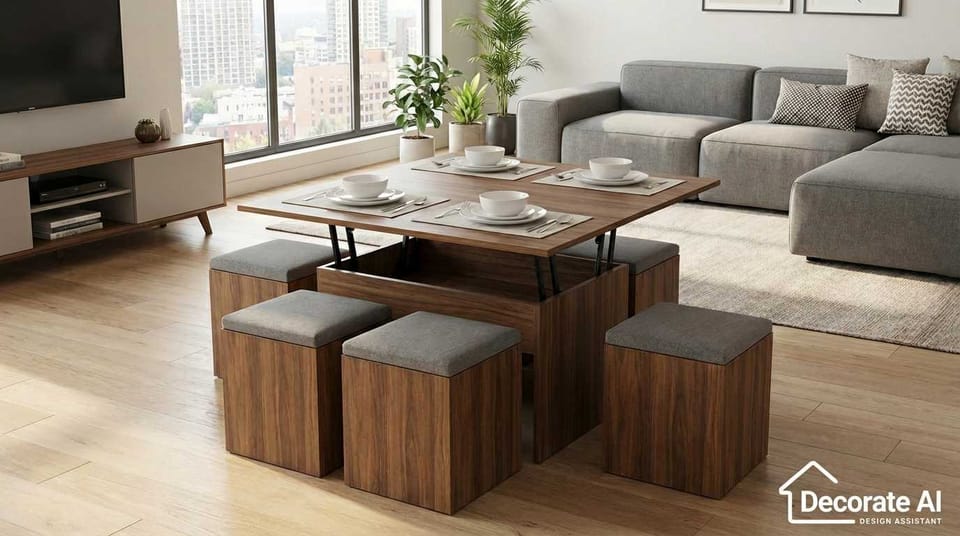
- Solution: Look for a convertible coffee table that lifts and expands into a dining table. This is a more integrated solution than a separate folding table that needs to be stored elsewhere. Pair it with modular seating that can be easily rearranged or nesting stools that can be tucked away.
The Playroom / Family Lounge
This space needs to withstand the joyful chaos of play during the day and transition into a calm, adult-friendly lounge in the evening.
- Zoning: The play zone needs open floor space and accessible storage. The lounge zone requires comfortable seating and surfaces for drinks or books.
- Solution: The hero here is modular storage. Think low-profile cabinets with deep drawers where toys can be quickly stowed. A modular sectional sofa can be reconfigured for different activities, and a durable ottoman with hidden storage can serve as a play surface and a footrest.
Part 3: The Arsenal of Adaptability - A Guide to Convertible Furniture
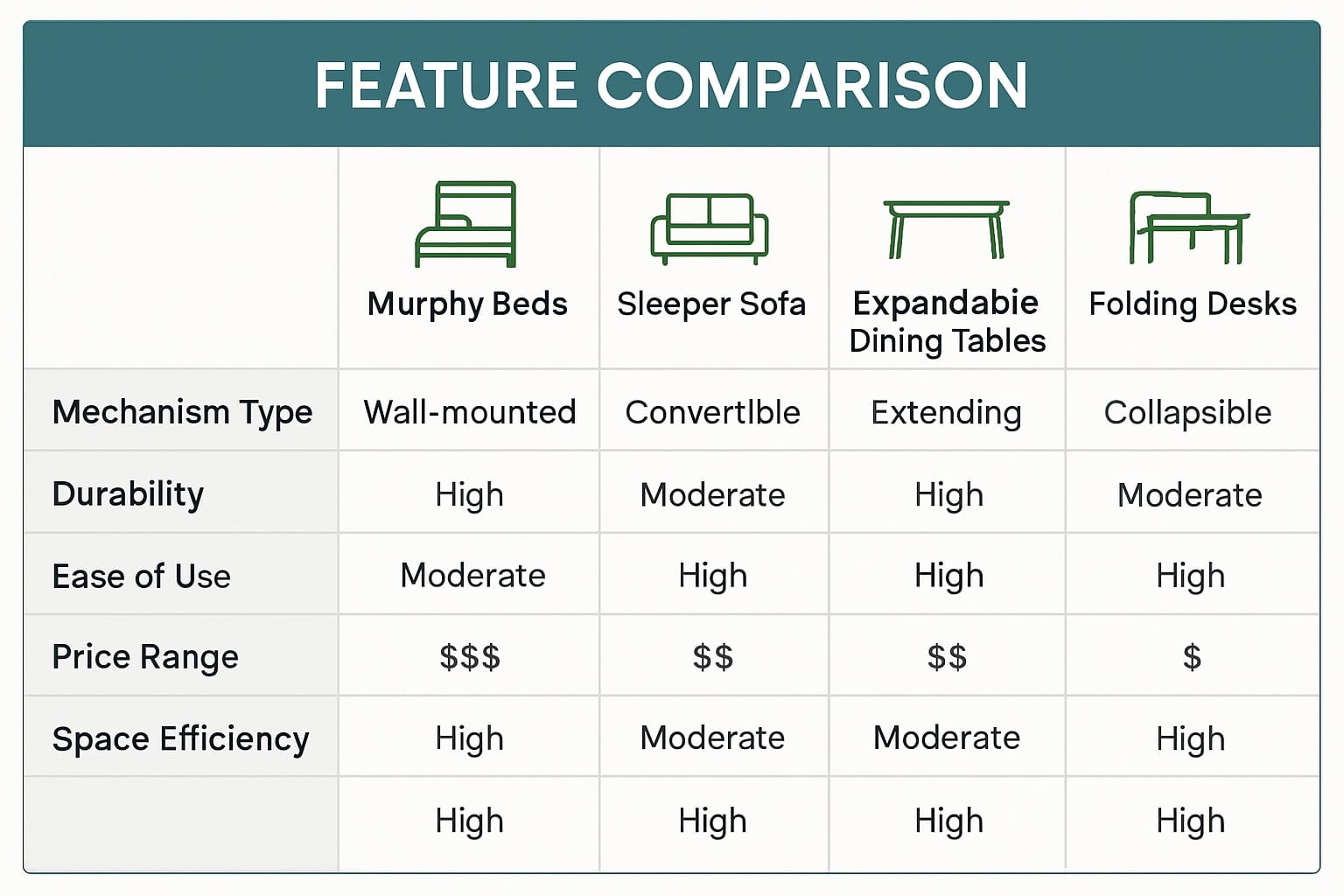
Once you’ve identified your strategy, it’s time to choose your tools. This is where most buyers get overwhelmed. E-commerce sites like Expand Furniture or Transformer Table excel at showcasing their own products but offer no unbiased comparison between different types of solutions. This section fills that critical gap, helping you evaluate categories before you look at brands.
Frequently Asked Questions
Is convertible furniture less durable than traditional furniture? Not necessarily. High-quality convertible furniture is engineered for movement and can be incredibly robust. The key is investing in pieces with solid mechanisms and durable materials, as outlined in our buyer's guide. Avoid no-name online deals that use plastic components in critical joints.
Does a wall bed have to be bolted into the wall studs? Yes, absolutely. A wall bed is extremely heavy, and the forces exerted when opening and closing it are significant. It must be professionally and securely anchored to the wall structure to prevent catastrophic failure and ensure safe operation.
Can I use my own mattress with a Murphy bed? It depends on the system. Most Murphy bed mechanisms are calibrated for a specific mattress weight and thickness (usually under 11 inches). Using a mattress that is too heavy or thick can strain the lifting mechanism and prevent the bed from closing properly. Always check the manufacturer's specifications.
How do I integrate these highly functional pieces into a cohesive design? This is a common challenge. The key is to choose transforming pieces that align with your overall aesthetic. Many modern systems come in a variety of finishes. You can use an AI design tool to upload a photo of your room and virtually place different styles to see how they integrate with your existing decor before you make a purchase.
Your Space, Reimagined
Moving beyond a cramped, single-purpose room is about more than buying a "space-saving" table. It's about a strategic shift in how you view your home—as a dynamic environment that can evolve with your needs.
By using the Flexible Home Framework to plan, understanding the unique strategies for your specific room, and evaluating solutions with an expert eye, you are now equipped to make a confident choice. You have the tools to create a space that works harder, feels larger, and truly reflects the full spectrum of your life.
Ready to see what's possible? Use Decorate AI to start visualizing your new, adaptive space today. Upload a photo of your room and let our AI generate layouts that incorporate these multi-functional principles, turning your plan into a tangible design.